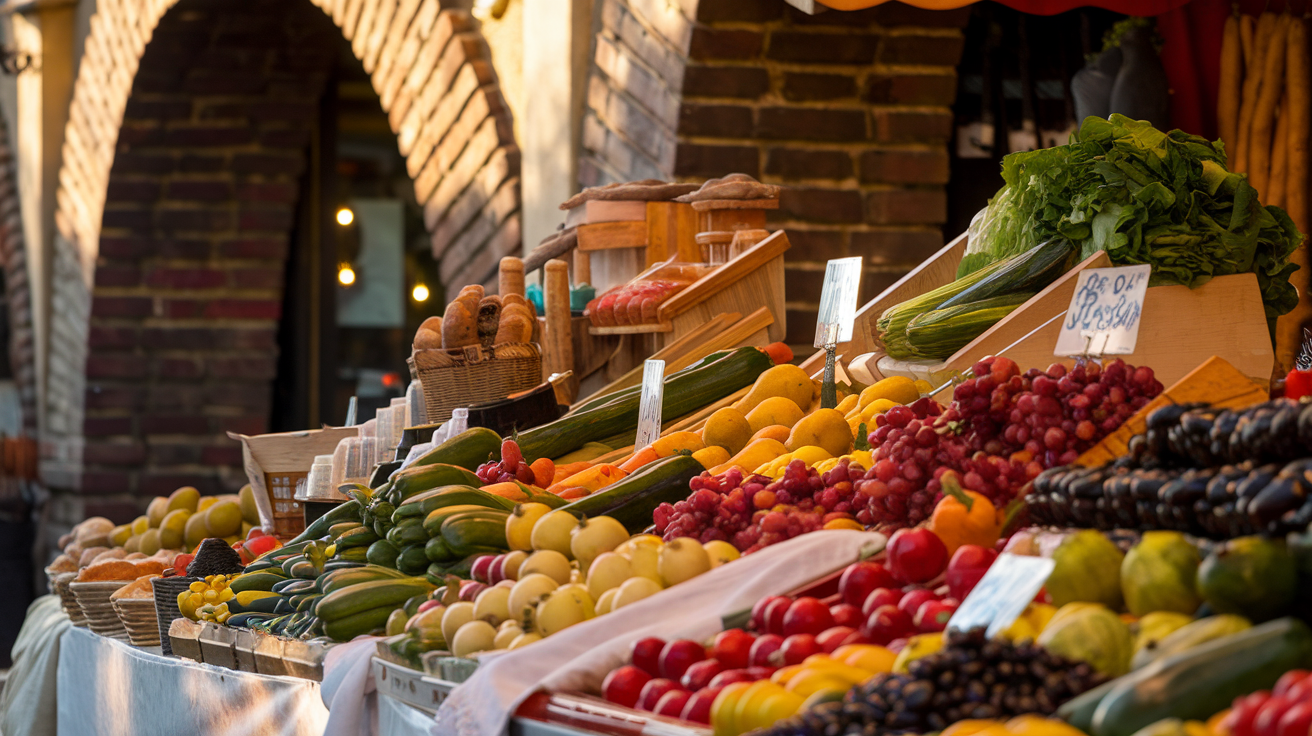
Food is one of Spain’s great pleasures, and thankfully it remains affordable compared to much of Western Europe. Fresh produce is excellent and reasonably priced, local markets offer quality that supermarkets can’t match, and eating out costs far less than in London, Paris, or most American cities. Understanding where to shop and what to expect helps you budget accurately and eat well on almost any income.
Supermarket landscape
Major chains and positioning
Spain’s supermarket sector is competitive, with several chains fighting for market share through different strategies. Understanding which stores serve which needs helps you shop efficiently and economically.
Mercadona dominates the Spanish market with over 1,600 stores nationwide. Their model focuses on own-brand products (Hacendado for food, Deliplus for personal care) at consistent prices. Quality is reliable though not premium, and the simplified product range makes shopping fast. Most expats end up using Mercadona for weekly staples.
Carrefour offers the widest product selection, including international imports that other chains don’t stock. Their hypermarkets carry everything from groceries to electronics; smaller Carrefour Express stores focus on convenience. Prices run slightly higher than Mercadona on comparable items, but the range compensates for many shoppers.
Lidl and Aldi bring the German discount model to Spain, with limited selection but aggressive prices on what they do stock. Both have upgraded their fresh produce and bakery sections in recent years, making them viable for more than just pantry staples. Weekly special buys (the famous middle aisle) offer everything from power tools to ski gear at steep discounts.
El Corte Inglés supermarkets (Supercor, Hipercor) cater to premium shoppers with extensive delicatessen sections, imported products, and higher service levels. Prices reflect this positioning—expect to pay 20-40% more than discount chains for comparable items. The quality justifies the premium for some products, particularly prepared foods and specialty items.
| Chain | Positioning | Price level | Best for |
|---|---|---|---|
| Mercadona | Value mainstream | €€ | Weekly staples |
| Carrefour | Wide selection | €€-€€€ | International products |
| Lidl | Discount | € | Budget shopping |
| Aldi | Discount | € | Budget shopping |
| Dia | Budget neighborhood | € | Convenience |
| El Corte Inglés | Premium | €€€€ | Specialty items |
| Consum | Regional quality | €€-€€€ | Fresh products (Valencia/Catalonia) |
Regional and local options
Beyond national chains, regional supermarkets often offer excellent value and better fresh products. Consum in Valencia and Catalonia has a strong reputation for quality. BonÀrea in Catalonia combines farming cooperative roots with competitive prices on meat and dairy. Gadis serves Galicia and parts of Castilla with products suited to northern tastes.
Neighborhood stores—small independent grocers, fruterías (fruit shops), panaderías (bakeries)—survive and even thrive despite supermarket competition. They’re often more expensive for packaged goods but excel at fresh products, personal service, and items supermarkets don’t stock. Building relationships with local shopkeepers is part of integrating into Spanish life.
Typical grocery prices
Prices vary by region, store, and season, but the following gives realistic expectations for standard supermarket shopping in 2025. Premium stores and specialty products cost more; discount chains and market shopping can reduce these figures.
Fresh produce
Spanish produce quality is excellent, particularly for Mediterranean staples grown domestically. Oranges, tomatoes, peppers, olive oil, and seasonal fruits cost less here than in most of Europe, reflecting Spain’s agricultural strength.
| Item | Typical price | Notes |
|---|---|---|
| Tomatoes (kg) | €1.50-2.50 | Cheaper in season (summer) |
| Oranges (kg) | €1.00-1.80 | Excellent November-April |
| Potatoes (kg) | €0.80-1.50 | Stable year-round |
| Onions (kg) | €0.80-1.30 | Basic staple |
| Peppers (kg) | €2.00-3.50 | Seasonal variation |
| Apples (kg) | €1.50-2.50 | Import prices higher |
| Bananas (kg) | €1.20-1.80 | Canarian are premium |
| Lettuce (head) | €0.80-1.30 | Year-round availability |
| Avocados (each) | €1.00-2.00 | Spanish-grown emerging |
| Lemons (kg) | €1.50-2.50 | Abundant domestically |
Seasonal shopping makes a significant difference. Summer tomatoes cost half what winter greenhouse tomatoes cost and taste incomparably better. Winter citrus is at its peak when summer fruits are expensive imports. Following Spanish seasonal eating patterns saves money and improves quality.
Meat and fish
Meat prices in Spain are reasonable by European standards, with pork particularly affordable given Spain’s massive pig farming industry. Beef costs more, reflecting lower domestic production; lamb varies seasonally around Easter and Christmas when demand spikes.
| Item | Typical price | Notes |
|---|---|---|
| Chicken breast (kg) | €6.00-8.00 | Whole chickens cheaper |
| Pork loin (kg) | €5.00-7.00 | Spain’s staple meat |
| Minced beef (kg) | €7.00-10.00 | Mixed pork/beef cheaper |
| Beef steak (kg) | €12.00-20.00 | Wide quality range |
| Ibérico ham (kg) | €15.00-80.00 | Huge quality spectrum |
| Chorizo (kg) | €6.00-12.00 | Quality matters |
| Bacon (kg) | €8.00-12.00 | Panceta is local style |
Fish and seafood prices depend heavily on what’s fresh, local, and in season. The fishing industry remains important in Spain, and coastal regions offer fresher, cheaper seafood than inland areas. Supermarket fish counters provide decent quality; fish markets (pescaderías) offer better selection and freshness for those who know what they’re buying.
| Item | Typical price | Notes |
|---|---|---|
| Fresh salmon (kg) | €12.00-18.00 | Often farmed |
| Fresh hake (kg) | €8.00-14.00 | Spanish favorite |
| Sardines (kg) | €4.00-7.00 | Excellent grilled |
| Shrimp/prawns (kg) | €10.00-25.00 | Wide size/quality range |
| Mussels (kg) | €2.50-4.00 | Galician are excellent |
| Squid/calamari (kg) | €8.00-14.00 | Frozen often good value |
Dairy and eggs
Spanish dairy products are straightforward and affordable. Milk is typically sold UHT (shelf-stable) rather than fresh, a difference that surprises some newcomers. Fresh milk is available but costs more and has shorter shelf life. Cheese ranges from mass-market to excellent artisanal varieties that rival any European country.
| Item | Typical price | Notes |
|---|---|---|
| Milk (1L) | €0.80-1.20 | UHT standard |
| Fresh milk (1L) | €1.20-1.60 | Less common |
| Eggs (dozen) | €2.00-3.50 | Free-range premium |
| Butter (250g) | €2.00-3.00 | Less used than in north |
| Yogurt (pack of 4) | €1.00-2.00 | Wide variety |
| Manchego cheese (kg) | €12.00-25.00 | Age affects price |
| Fresh cheese (kg) | €5.00-8.00 | Burgos style common |
Pantry staples
Basic pantry items are where Spanish prices really shine compared to northern Europe. Olive oil, despite recent price increases, remains more affordable than in countries that import it. Rice, legumes, flour, and pasta cost little, and Spanish brands offer good quality.
| Item | Typical price | Notes |
|---|---|---|
| Olive oil, extra virgin (1L) | €6.00-10.00 | Prices have risen |
| Sunflower oil (1L) | €1.50-2.50 | Cooking alternative |
| Rice (1kg) | €1.00-2.00 | Bomba for paella more |
| Pasta (500g) | €0.70-1.50 | Italian brands pricier |
| Bread (loaf) | €0.80-2.50 | Bakery bread better |
| Flour (1kg) | €0.60-1.20 | Basic staple |
| Sugar (1kg) | €1.00-1.50 | Stable pricing |
| Coffee (250g) | €2.50-5.00 | Ground; beans more |
| Chickpeas, dried (1kg) | €1.50-2.50 | Legume staple |
| Canned tomatoes (400g) | €0.50-1.00 | Cooking essential |
Beverages
Spanish wine offers extraordinary value, with drinkable bottles starting under €3 and excellent wines available for €6-12. Beer is similarly affordable, with domestic brands costing little more than water. Soft drinks and juices follow standard European pricing.
| Item | Typical price | Notes |
|---|---|---|
| Table wine (bottle) | €2.00-4.00 | Supermarket quality |
| Good wine (bottle) | €5.00-12.00 | Rioja, Ribera del Duero |
| Beer, domestic (6-pack) | €3.00-5.00 | Mahou, Estrella, etc. |
| Beer, import (6-pack) | €5.00-8.00 | Craft beer more |
| Still water (1.5L) | €0.30-0.60 | Tap water safe |
| Orange juice (1L) | €1.50-3.00 | Fresh-squeezed more |
| Coca-Cola (2L) | €1.80-2.50 | Standard pricing |
Local markets
Municipal markets
Every Spanish town of any size has a mercado municipal—a covered market where independent vendors sell fresh produce, meat, fish, and specialty items. These markets represent the traditional heart of Spanish food culture, and shopping there offers experiences supermarkets can’t match.
Market shopping means better quality for many products. Vendors specialize in their categories—the fruit seller knows which melon is perfectly ripe, the fishmonger can recommend what arrived fresh that morning, the butcher will cut meat exactly as you want it. This expertise and personal service justify slightly higher prices on some items.
Major cities have iconic markets worth visiting even if you don’t live nearby. Barcelona’s La Boquería, Madrid’s Mercado de San Miguel, and Valencia’s Mercado Central attract tourists, but locals still shop there. Neighborhood markets throughout these cities offer similar quality without the crowds.
Prices in markets can be higher or lower than supermarkets depending on the product and vendor. Seasonal produce from local farms often costs less than supermarket equivalents; specialty items and premium cuts cost more. The quality difference, particularly for fresh fish and meat, often makes market prices worthwhile.
Farmers’ markets and direct sales
Beyond permanent municipal markets, weekly farmers’ markets (mercadillos) appear throughout Spain. These outdoor markets bring producers directly to consumers, offering seasonal produce, artisanal cheeses, honey, and specialty items that never reach supermarket shelves.
Market days vary by town—some hold markets on specific weekdays, others on weekends. Larger cities have multiple markets in different neighborhoods on different days. Asking locals about market schedules reveals options your internet search might miss.
Direct farm sales (venta directa) are increasingly popular, particularly for olive oil, wine, and specialty products. Visiting cooperatives and farms lets you buy at producer prices while learning about what you’re eating. Some farms offer subscription boxes delivering seasonal produce weekly.
Eating out costs
Coffee and breakfast
Spanish breakfast culture centers on the bar or café, where workers stop for a quick coffee and toast on their way to work. This habit is affordable enough to maintain daily, and the social aspect makes it worthwhile even when eating at home would cost less.
A café con leche (coffee with milk) costs €1.20-1.80 at a normal neighborhood bar. A tostada (toast with tomato, olive oil, or jam) adds €1.50-3.00. The full desayuno—coffee plus toast—runs €2.50-5.00 in most places, more at tourist locations or upscale cafés.
| Item | Typical price | Notes |
|---|---|---|
| Espresso | €1.00-1.50 | Café solo |
| Café con leche | €1.20-1.80 | Standard order |
| Tostada con tomate | €1.50-2.50 | Andalusian style |
| Croissant | €1.20-2.00 | Bakery fresh better |
| Churros con chocolate | €3.00-5.00 | Weekend treat |
Lunch: the menú del día
The menú del día is one of Spain’s greatest values. This fixed-price lunch, offered by restaurants throughout the country, typically includes a first course, second course, dessert, bread, and a drink (wine, beer, or water) for €10-15 in most areas. Even in Barcelona or Madrid, €12-18 gets you a substantial three-course meal.
This tradition exists because Spanish workers expect a proper lunch. Rather than sandwiches at desks, Spanish work culture (at least traditionally) includes a real midday break. Restaurants compete for this business with quality and value that would be impossible to replicate at dinner prices.
The menú del día varies by restaurant and day. Workers frequent places whose cooks they trust, returning daily to their preferred spots. Following locals to busy lunch spots reveals the best values; empty restaurants at 2 PM should be viewed skeptically.
| Menú del día | Price range | Typical location |
|---|---|---|
| Budget | €10-12 | Working class neighborhoods |
| Standard | €12-15 | Most areas |
| Upscale | €15-20 | Business districts, nicer restaurants |
| Premium | €20-30 | High-end restaurants |
Tapas and casual dining
Tapas culture varies dramatically across Spain. In parts of Andalusia (Granada, Almería, Jaén), bars still give free tapas with drink orders—you can eat dinner for the price of a few beers. In Barcelona and much of the coast, tapas are ordered and paid for separately, costing €3-8 per plate.
A typical tapas dinner with drinks runs €15-25 per person in most of Spain—enough food across three or four shared plates, plus wine or beer. This can go higher at trendy spots or with premium ingredients (jamón ibérico, seafood), but even upscale tapas rarely breaks €40-50 per person.
| Tapas item | Typical price | Notes |
|---|---|---|
| Patatas bravas | €4-6 | Universal favorite |
| Croquetas (6 pcs) | €5-8 | Quality varies hugely |
| Jamón ibérico | €8-15 | Premium product |
| Tortilla española | €3-6 | By the slice |
| Gambas al ajillo | €8-12 | Garlic shrimp |
| Caña (small beer) | €1.50-2.50 | Standard drink |
| Glass of wine | €2-4 | House wine |
Restaurant dining
Proper restaurant meals (as opposed to menú del día or tapas) cost more but remain reasonable by European standards. A main course at a decent restaurant runs €12-20; starters €6-12; desserts €5-8. Add wine and the bill reaches €30-50 per person at mid-range establishments.
Fine dining exists in Spanish cities, with prices to match—€80-150 per person at serious restaurants, €200+ at Michelin-starred establishments. But Spain’s food culture doesn’t fetishize expensive restaurants the way some countries do. Excellent meals at reasonable prices are the norm, not the exception.
Monthly food budgets
Single person
A single person’s monthly food budget in Spain varies dramatically based on lifestyle choices. The spectrum runs from extremely frugal to comfortable:
| Budget level | Monthly total | Approach |
|---|---|---|
| Frugal | €150-200 | Cook everything, discount stores |
| Moderate | €250-350 | Mix of cooking and eating out |
| Comfortable | €350-450 | Regular restaurants, quality ingredients |
| Generous | €450-600 | Frequent dining, premium shopping |
Most expats land in the moderate range, cooking at home most days with occasional meals out. This budget allows for quality ingredients from markets, the occasional menú del día, and tapas with friends—living well without extravagance.
Couple
Couples benefit from economies of scale in grocery shopping—buying larger quantities, reducing waste, and splitting fixed costs. A reasonable monthly budget:
| Budget level | Monthly total | Notes |
|---|---|---|
| Frugal | €250-350 | Home cooking focus |
| Moderate | €400-550 | Balanced approach |
| Comfortable | €550-750 | Regular dining out |
| Generous | €750-1,000 | Premium lifestyle |
Family with children
Families face higher absolute costs but lower per-person costs. Children’s portions cost less at restaurants, and family-style cooking efficiently feeds multiple people. A family of four might budget:
| Budget level | Monthly total | Notes |
|---|---|---|
| Frugal | €400-550 | Careful shopping, home cooking |
| Moderate | €600-800 | Typical family budget |
| Comfortable | €800-1,100 | Regular treats, restaurants |
Tips for saving money
Shopping strategies
Shop multiple stores. Mercadona for staples, Lidl or Aldi for pantry items and weekly specials, markets for fresh produce and meat. The time investment pays off in both savings and quality.
Buy seasonal. Spanish produce follows strong seasonal patterns. Summer tomatoes, winter citrus, spring artichokes—eating in season costs less and tastes better. Forcing strawberries in December means paying for imports from who-knows-where.
Check unit prices. Spanish supermarkets display price per kilogram alongside package prices. Larger packages often cost more per unit than smaller ones (the opposite of what you might expect). Check before assuming bigger is cheaper.
Embrace Spanish brands. Mercadona’s Hacendado line offers good quality at low prices. Spanish olive oil, wine, and canned goods compete with or beat imports while costing less. National pride aside, domestic products often make financial sense.
Cooking at home
Spanish cuisine rewards home cooking. Many traditional dishes—tortilla española, gazpacho, cocido, paella—are simple to make with affordable ingredients. Learning to cook Spanish food saves money while deepening your connection to local culture.
Batch cooking suits Spanish culinary traditions. Stews, legume dishes, and rice plates all improve with time and make excellent leftovers. Cooking larger quantities a few times a week beats preparing every meal from scratch.
The siesta tradition creates time for home cooking that Anglo work schedules don’t. If your work allows a proper lunch break, eating your main meal at home during midday (the traditional Spanish pattern) costs less than restaurant alternatives.
Regional variations
Food costs vary across Spain, though less dramatically than housing. Generally:
Most affordable: Andalusia, Extremadura, Castilla-La Mancha, Murcia. Agricultural regions with lower wages and living costs extend to food prices.
Mid-range: Valencia, most of Catalonia outside Barcelona, Galicia, Asturias. Good value considering quality of local products.
More expensive: Madrid, Barcelona, Basque Country, Balearic Islands. Higher wages and living costs push prices up, though good values remain findable.
Most expensive: Tourist zones (Costa del Sol, Costa Brava in summer), upscale neighborhoods in major cities. Captive audiences pay premium prices.
Even in expensive areas, local knowledge reveals affordable options. The tourist restaurant on the plaza charges €15 for paella; three streets away, a workers’ bar serves the same for €8. Finding where locals eat—rather than where guidebooks send tourists—makes almost anywhere affordable.
Key takeaways
Food in Spain offers excellent value whether you’re shopping at supermarkets, browsing local markets, or eating out at traditional restaurants. The menú del día provides proper lunches for €10-15, tapas culture keeps casual dining affordable, and grocery prices run well below northern European levels.
Success comes from adapting to Spanish food culture rather than fighting it. Shop markets for fresh products, embrace seasonal eating, learn to cook local dishes, and discover the neighborhood bars where locals take their daily coffee. The Spanish approach to food—treating meals as pleasures worth savoring rather than chores to optimize—enhances life in ways that transcend mere budgeting.
Monthly grocery budgets of €200-400 per person cover comfortable living; eating out regularly adds €100-200 more. These figures allow for quality ingredients, occasional splurges, and the social eating that defines Spanish life. For most expats, food becomes one of the unexpected pleasures of living in Spain—delicious, affordable, and deeply integrated into daily rhythms.

Written by
John Spencer
John Spencer is a writer, researcher, and digital entrepreneur who specializes in expat life, relocation strategy, and lifestyle design—particularly in Spain. His work focuses on turning overwhelming topics like visas, residency, healthcare, banking, and cost of living into straightforward, decision-ready insights.
Disclaimer: The information on this page is for general informational purposes only and does not constitute legal, tax, financial, or medical advice. Requirements and regulations change frequently. Always verify information with official Spanish government sources and consult qualified professionals for your specific situation.
Planning your move?
Get our free checklist with everything you need to do before and after arriving in Spain.
Get the checklist