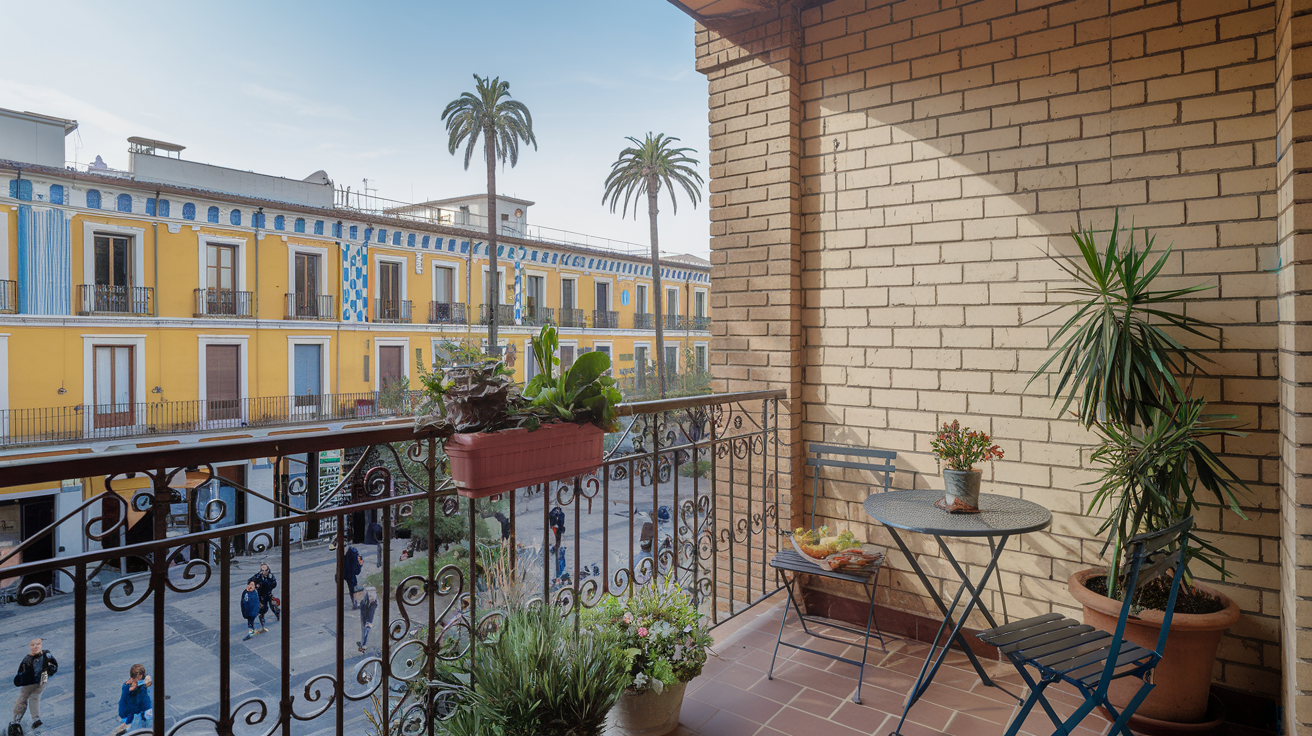
Moving to Spain with children raises immediate questions about education. Where will they go to school? How does the Spanish system work? Will they learn Spanish quickly enough to keep up academically? These concerns are valid, but thousands of expat families have navigated this transition successfully. Understanding your options and the enrollment process helps you make informed decisions for your children’s education.
The Spanish education system
Structure and stages
Spanish education follows a structure familiar to most European families, with some terminology that takes adjustment. Education is compulsory from ages 6 to 16, but most children attend school from age 3 when free public preschool becomes available.
Educación Infantil (Early childhood, ages 0-6): The first cycle (0-3) covers nursery care, which isn’t free. The second cycle (3-6) is free in public schools and provides educational preschool that most Spanish children attend. This stage isn’t compulsory but is nearly universal.
Educación Primaria (Primary, ages 6-12): Six years of primary education covering basic subjects. Children progress through courses (1º through 6º de Primaria) roughly corresponding to their age minus five or six.
Educación Secundaria Obligatoria, ESO (Secondary, ages 12-16): Four years of compulsory secondary education. Students complete 1º through 4º de ESO. At the end, they receive the título de ESO if they pass, which is required for further academic or vocational education.
Bachillerato (Upper secondary, ages 16-18): Two years of academic preparation for university. Students choose a branch—Sciences, Humanities, Social Sciences, or Arts—that determines their subjects and shapes university options.
Formación Profesional (Vocational training): Alternative to Bachillerato for students pursuing practical careers. Offers qualifications in fields from mechanics to nursing to digital design.
| Stage | Ages | Duration | Compulsory |
|---|---|---|---|
| Infantil (1st cycle) | 0-3 | 3 years | No |
| Infantil (2nd cycle) | 3-6 | 3 years | No (but free) |
| Primaria | 6-12 | 6 years | Yes |
| ESO | 12-16 | 4 years | Yes |
| Bachillerato | 16-18 | 2 years | No |
Regional variations
Education in Spain is managed by autonomous communities (regions), not the central government. This means curriculum, school calendars, and some policies vary by region. Catalonia, Basque Country, and Galicia teach partly or primarily in regional languages. Other communities have bilingual programs or specific curriculum emphases.
These regional differences matter for families considering moves within Spain. A child educated in Catalan in Barcelona may face adjustment moving to Madrid where instruction is in Castilian Spanish. International school curricula avoid this issue but at significant cost.
School types
Public schools (Colegios públicos)
Public schools are free, funded by the Spanish government and regional authorities. They follow the national curriculum (with regional adaptations) and employ teachers who are civil servants, having passed competitive exams (oposiciones) for their positions.
Quality varies between public schools, often correlating with neighborhood demographics. Schools in affluent areas tend to have more engaged parent communities, better facilities, and stronger academic outcomes—though excellent public schools exist in working-class neighborhoods too. Researching specific schools rather than assuming all publics are equivalent helps families make informed choices.
Public schools assign places based primarily on proximity to home. Your padrón registration determines which schools you can access. Popular schools in desirable neighborhoods may be oversubscribed, with places allocated by points systems that favor local residents, siblings already enrolled, and other criteria.
The advantages of public schools include zero tuition costs, full immersion in Spanish language and culture, and integration with local families. Children attending public schools typically learn Spanish quickly through daily immersion and make Spanish friends who become their social network.
Semi-private schools (Colegios concertados)
Concertados are privately owned (often by religious organizations, particularly the Catholic Church) but receive government funding in exchange for following the public curriculum and limiting fees. They occupy a middle ground between fully public and fully private education.
These schools can charge modest fees for optional services—uniforms, extracurricular activities, meals—but the core education is funded publicly and essentially free. Many concertados are religious, incorporating faith-based values and sometimes requiring participation in religious education, though secular concertados exist.
Quality at concertados is generally perceived as higher than average public schools, though this perception partly reflects selection effects—families who research schools and navigate the application process tend to be more educationally engaged. The schools themselves often have strong traditions, established reputations, and active parent communities.
Admission to concertados involves application to individual schools, typically well in advance of the school year. Popular concertados have waiting lists; securing a place may require applying when your child is still a toddler. The points-based admission systems favor proximity, siblings, and other criteria similar to public schools.
Private schools (Colegios privados)
Fully private schools receive no government funding and charge substantial tuition fees. They have freedom to set their own curriculum, hire teachers without civil service requirements, and operate more flexibly than public or concertado alternatives.
This category includes:
Spanish private schools: Following the Spanish curriculum but with additional resources, smaller classes, and often bilingual programs (typically Spanish-English). Fees range from €5,000-15,000 annually depending on the school and location.
International schools: Following foreign curricula—British A-levels, American high school diplomas, International Baccalaureate (IB), French Baccalauréat, German Abitur. These schools cater primarily to expat families and charge €10,000-25,000+ annually.
Elite private schools: Prestigious institutions with excellent facilities, extensive extracurriculars, and social cachet. Some are centuries old with distinguished alumni; others are newer but equally sought-after. Fees can exceed €30,000 annually at top schools.
| School type | Annual cost | Curriculum | Primary language |
|---|---|---|---|
| Public | Free | Spanish national | Spanish (or regional) |
| Concertado | €0-1,500 | Spanish national | Spanish (or regional) |
| Spanish private | €5,000-15,000 | Spanish national | Spanish/bilingual |
| International | €10,000-25,000+ | Foreign (UK, US, IB) | English (typically) |
International schools
International schools deserve separate discussion given their importance to expat families. These schools exist specifically to serve internationally mobile families, offering curricula recognized worldwide and instruction primarily in English.
British schools follow the English National Curriculum through GCSEs and A-levels. These prepare students for UK universities but are recognized globally. Major cities have established British schools; coastal areas popular with British expats have several options.
American schools follow US curriculum standards, preparing students for American universities through familiar structures (grades K-12, SAT/ACT preparation, AP courses). Less common than British schools but present in major cities.
International Baccalaureate (IB) schools offer the IB curriculum—Primary Years Programme, Middle Years Programme, and Diploma Programme. The IB is specifically designed for international education and is recognized by universities worldwide. Many international schools offer IB as an alternative or addition to national curricula.
International schools protect academic continuity for families who may move again. A child following British A-levels in Madrid can continue the same curriculum in Singapore or return to the UK without disruption. This portability comes at significant financial cost but provides genuine value for mobile families.
The trade-off is reduced integration with Spanish society. International school students often socialize primarily with other expats, may learn Spanish as a foreign language rather than through immersion, and miss cultural experiences their public school peers have. Families staying in Spain long-term should weigh this isolation against the practical benefits.
Choosing a school
Factors to consider
Language: How important is Spanish immersion versus maintaining English or your native language? Children entering public schools without Spanish face a steep initial challenge but typically achieve fluency within a year or two. International schools ease the transition but may delay full Spanish acquisition.
Length of stay: Families committed to Spain long-term often choose public or concertado schools for cultural integration. Those who might move in a few years often prefer international schools for curriculum continuity.
Child’s age: Younger children adapt to new languages and school systems more easily. A six-year-old entering Spanish public school will likely thrive; a fifteen-year-old facing the same transition while preparing for university-track exams faces a much harder path.
Academic needs: Children with learning differences, giftedness, or other special needs may find more support in private schools with smaller classes and more resources. Public schools have special education provisions, but quality and availability vary.
Family values: Religious families may prefer concertados aligned with their faith. Families prioritizing Spanish cultural integration may specifically choose public schools. Those valuing international perspectives may prefer diverse international school student bodies.
Budget: Private and international school fees are significant ongoing expenses. A family with two children at a €15,000/year school faces €30,000 annually for education alone—a substantial budget item that competes with housing, savings, and lifestyle spending.
Researching schools
Start researching schools before you move, if possible. Online reviews (though take these with skepticism), school websites, and expat forums provide initial information. Once in Spain, visit schools, speak with administrators, and talk to current parents if you can connect with them.
Key questions to ask:
- What support exists for children arriving without Spanish?
- What is the school’s approach to integration of new students?
- How diverse is the student body?
- What extracurricular activities are available?
- What are typical class sizes?
- What do academic outcomes (exam results, university placements) look like?
- What parent involvement is expected?
For international schools, also ask about accreditation, teacher qualifications and turnover, and how the school handles students moving to other countries or education systems.
The enrollment process
Public and concertado schools
Enrollment in public and concertado schools follows regulated timelines that vary by region but typically work as follows:
Registration period: Usually March-April for the following September school year. Regions publish exact dates annually. Applications are submitted to individual schools or through centralized regional systems.
Points-based admission: When schools are oversubscribed, places are allocated by points. Criteria typically include:
| Criterion | Typical points | Notes |
|---|---|---|
| Proximity to home | 6-10 | Based on padrón address |
| Siblings at school | 8-10 | Major priority factor |
| Parent works at/near school | 2-4 | Less common |
| Large family (3+ children) | 1-3 | Familia numerosa status |
| Single-parent household | 1-2 | Varies by region |
| Disability in family | 2-4 | Child or parent/sibling |
| Low income | 1-2 | Income-based criteria |
Waiting lists: If you don’t receive a place at your preferred school, you’ll be placed on a waiting list and assigned to a school with availability. As families move or decline places, waiting lists advance.
Mid-year enrollment: Arriving outside the normal enrollment period complicates matters. Contact the regional education authority (Consejería de Educación) and local schools directly. Schools must accept students who move into their catchment area, but finding places at popular schools mid-year is difficult.
Required documents
For public and concertado enrollment, you’ll typically need:
- Child’s passport or ID
- Parent’s passport or ID
- Padrón certificate (proof of address)
- Previous school records (transcripts, reports)
- Medical/vaccination records
- Birth certificate (sometimes)
- Photographs
- Completed application forms
If your documents are in English or another language, you may need official translations (traducciones juradas). Some schools accept documents in major European languages; others require Spanish translations. Ask before paying for unnecessary translations.
International and private schools
Private and international schools set their own enrollment procedures and timelines. Most accept applications year-round, though starting at natural break points (beginning of school year, after Christmas) is preferable.
These schools typically require:
- Application forms (often with fees)
- Previous school records
- Reference letters from current school
- Interview (child and sometimes parents)
- Assessment tests (academic level, English proficiency)
Popular international schools have waiting lists, sometimes years long. If you’re considering specific schools, contact them early—even before finalizing your move—to understand availability and application requirements.
Supporting your child’s transition
Language acquisition
Children arriving without Spanish face their biggest challenge in language. The good news is that children acquire languages remarkably quickly when immersed; the difficult news is that the first months can be frustrating and isolating.
Most Spanish schools provide some support for non-Spanish speakers, though quality varies widely. Aulas de enlace (linking classrooms) or similar programs offer intensive Spanish instruction for newcomers before or alongside regular classes. Ask prospective schools specifically what support exists.
Private Spanish tutoring accelerates acquisition. An hour or two weekly with a tutor who understands your child’s needs complements school immersion effectively. Some families arrange intensive Spanish summer programs before the school year begins.
At home, decide on a language strategy. Some families maintain English at home to preserve the mother tongue while the child acquires Spanish at school. Others maximize Spanish exposure by using Spanish media, activities, and social connections. Either approach can work; consistency matters more than which strategy you choose.
Academic adjustment
Spanish curriculum differs from other countries in sequence and emphasis. A child may find that topics they’ve already covered are being taught again, while other topics they expected to know are assumed knowledge. This uneven alignment typically resolves over a year or two as the child catches up on gaps and reinforces areas of overlap.
Mathematics often transfers most easily—numbers work the same everywhere—though terminology and some methods differ. Science content varies more by country. History and social studies are inevitably Spain-focused, which means new material regardless of your child’s background.
For older children, academic records from previous schools help Spanish teachers understand what the child has already learned. Bringing detailed transcripts, sample work, or curriculum descriptions from your previous school helps teachers plan appropriate support.
Social adjustment
Making friends in a new country, in a new language, can be harder than academics. Children who were socially confident may struggle when they can’t communicate naturally with peers. Patience and opportunities help.
Extracurricular activities—sports teams, music groups, art classes—provide structured social interaction where language matters less than shared activity. Football (soccer) is nearly universal among Spanish children; other sports and activities create natural connection points.
Inviting classmates for playdates, even when communication is limited, builds relationships. Spanish families often reciprocate hospitality, and these connections help both children and parents integrate into local social networks.
International schools have built-in expat communities where children share the experience of being foreign. This can be comforting but may delay integration with Spanish peers. Families at international schools sometimes seek Spanish activities outside school to balance expat-heavy social circles.
Costs and financial planning
Public education costs
Public school is free, but “free” doesn’t mean zero cost. Families typically pay for:
| Expense | Annual cost | Notes |
|---|---|---|
| Books and materials | €150-400 | Some regions provide free books |
| Uniforms (if required) | €100-200 | Not universal in public schools |
| School meals | €800-1,500 | If child eats at school |
| Extracurriculars | €200-500 | Sports, music, etc. |
| AMPA fees | €20-50 | Parent association |
| Excursions | €50-150 | Field trips, activities |
Some regions provide free textbooks through lending schemes; others require purchase. School meals (comedor) are optional but essential for working parents—children staying for lunch need to be enrolled in the meal program.
Private school budgets
Private and international school families face substantially higher costs. Beyond tuition, factor in:
| Expense | Annual cost | Notes |
|---|---|---|
| Tuition | €8,000-25,000+ | Varies widely |
| Registration/enrollment | €500-3,000 | Often one-time |
| Uniforms | €300-600 | Required at most |
| Books and materials | €300-700 | Sometimes included |
| School meals | €1,200-2,000 | Higher quality options |
| Transport | €1,000-3,000 | If school buses used |
| Extracurriculars | €500-2,000 | Often extra fees |
A single child at a mid-range international school might cost €15,000-20,000 annually when all expenses are included. Two children double this figure. These costs continue for years and should be planned as ongoing budget items, not one-time expenses.
Financial aid and discounts
Some private schools offer scholarships or financial aid, particularly for academically strong students. Ask schools directly about available support—it’s not always advertised but may be available on request.
Sibling discounts are common, typically 5-15% off tuition for second and subsequent children. Some schools offer discounts for annual payment rather than monthly installments.
Embassy schools may offer reduced rates for citizens of their countries. French, German, and other national schools sometimes have fee structures that favor their compatriots.
Special considerations
Special educational needs
Spanish law guarantees education for children with disabilities and special needs, including integration into mainstream schools with appropriate support. Pedagogos terapéuticos (therapeutic educators) and orientadores (counselors) provide services within schools.
Reality often falls short of legal guarantees. Support quality varies between regions, schools, and individual staff. Families with children requiring significant support should research specific schools’ capabilities and speak with other families in similar situations.
Private and international schools may offer smaller classes and more individualized attention, but their special needs provision also varies. Some excel at supporting diverse learners; others quietly discourage enrollment of children requiring extra support. Ask direct questions and seek references from families with similar needs.
Gifted education
Spain’s formal gifted education programs are limited compared to some countries. Identification of gifted students is inconsistent, and dedicated programs are rare. Enrichment typically comes through individual teacher attention, extracurricular activities, or private initiatives.
Families with academically advanced children may find international schools or specific private schools better equipped to provide appropriate challenge. Some families supplement school with external programs—online courses, Saturday enrichment, or independent study—to meet their children’s needs.
Homeschooling
Homeschooling exists in a legal gray area in Spain. Education is compulsory, and the law doesn’t explicitly recognize home education as fulfilling this requirement. In practice, authorities rarely pursue homeschooling families, but the legal ambiguity creates uncertainty.
Families considering homeschooling should research current legal interpretations (which vary by region), connect with Spanish homeschooling communities for guidance, and understand that they’re operating outside the mainstream educational framework.
Key takeaways
Choosing the right school depends on your family’s specific circumstances—how long you’re staying, your budget, your child’s age and needs, and your priorities for integration versus continuity. There’s no universally correct answer, but understanding the options lets you make informed decisions.
Public schools offer free education and deep cultural immersion but require navigating Spanish bureaucracy and supporting your child through language acquisition. International schools ease transitions and maintain curriculum continuity but cost substantially and may limit Spanish integration.
Start researching early, visit schools when possible, and trust that children are resilient. Thousands of expat families have successfully navigated Spanish education, and most children—after an adjustment period—thrive in their new schools. The experience of adapting to a new educational system often becomes a source of strength and flexibility that serves children well throughout their lives.

Written by
John Spencer
John Spencer is a writer, researcher, and digital entrepreneur who specializes in expat life, relocation strategy, and lifestyle design—particularly in Spain. His work focuses on turning overwhelming topics like visas, residency, healthcare, banking, and cost of living into straightforward, decision-ready insights.
Disclaimer: The information on this page is for general informational purposes only and does not constitute legal, tax, financial, or medical advice. Requirements and regulations change frequently. Always verify information with official Spanish government sources and consult qualified professionals for your specific situation.
Planning your move?
Get our free checklist with everything you need to do before and after arriving in Spain.
Get the checklist