Spain’s geography offers extraordinary outdoor variety within a single country. From the green mountains of the north to Mediterranean beaches, from high Pyrenean peaks to volcanic Canarian landscapes, outdoor enthusiasts find endless options for adventure and recreation. The climate cooperates for most of the year, and outdoor culture is deeply embedded in Spanish life—whether that’s a Sunday family hike, daily beach visits, or evening football in the park.
Hiking and walking
Why Spain excels for hiking
Spain contains more mountainous terrain than any European country except Switzerland, with ranges crossing the country in multiple directions. The Pyrenees form the French border; the Cantabrian Mountains parallel the northern coast; the Sistema Central divides the central plateau; the Sierra Nevada rises in the south. Between these major ranges, countless smaller sierras offer hiking opportunities within reach of every city.
The country maintains excellent trail networks. The GR (Gran Recorrido) system of long-distance paths crosses Spain in multiple routes, with shorter PR (Pequeño Recorrido) and local trails connecting to them. Signage is generally good, though quality varies by region. Spain pioneered the Sendero concept that became the European E-paths system.
Climate allows year-round hiking somewhere in Spain. Northern mountains are best in summer; southern lowlands suit winter walking; spring and fall work almost everywhere. This flexibility means relocating your hiking based on season rather than putting boots away for months.
Top hiking regions
Picos de Europa (Cantabria, Asturias, León)
These dramatic limestone peaks offer Spain’s most spectacular high-mountain scenery without the altitude extremes of the Pyrenees. The range contains three massifs with peaks exceeding 2,600 meters, deep gorges, glacial lakes, and traditional mountain villages.
The Cares Gorge trail is Spain’s most famous walk—12 kilometers carved into cliffs above the river, connecting Poncebos and Caín. Despite its dramatic appearance, the route is manageable for reasonably fit walkers. The Fuente Dé cable car provides easy access to high terrain for those wanting alpine scenery without a major ascent.
Pyrenees (Aragón, Catalonia, Navarra)
The Pyrenean chain stretches 430 kilometers along the French border, ranging from gentle foothills to the 3,404-meter Aneto, Spain’s highest mainland peak. The Spanish side tends toward steep, dramatic valleys; the French side has gentler gradients.
Ordesa and Monte Perdido National Park showcases Pyrenean landscapes at their most dramatic—a canyon system rivaling any in Europe with waterfalls, vertical walls, and high-altitude plateaus. The Cola de Caballo waterfall trail is accessible; the Monte Perdido summit requires mountaineering skills.
Camino de Santiago
The pilgrimage routes to Santiago de Compostela have become major hiking destinations regardless of religious motivation. The Camino Francés (French Way) is most popular, crossing northern Spain for 780 kilometers from the Pyrenees to Galicia. Most walkers take 30-35 days.
Other routes offer alternatives: the Camino del Norte along the coast, the Camino Portugués from Lisbon or Porto, the Vía de la Plata from Seville. Infrastructure supports pilgrims with affordable albergues (hostels), trail marking, and services in every town.
| Route | Distance | Duration | Character |
|---|---|---|---|
| Camino Francés | 780 km | 30-35 days | Classic, busiest |
| Camino del Norte | 825 km | 32-35 days | Coastal, hilly |
| Camino Portugués | 620 km | 25-28 days | Gentler terrain |
| Vía de la Plata | 1,000 km | 40+ days | Hot, historic |
Sierra Nevada (Andalusia)
Southern Spain’s surprise: a high mountain range containing mainland Spain’s highest peak (Mulhacén, 3,479m) within sight of Mediterranean beaches. The Sierra Nevada combines skiing in winter with high-altitude hiking in summer, all within an hour of Granada.
The Alpujarras villages on the southern slopes offer a different hiking experience—whitewashed pueblos connected by ancient paths through terraced hillsides. The contrast between these gentle walks and the technical alpine terrain above suits diverse abilities.
Canary Islands
Volcanic landscapes unlike anywhere else in Spain draw hikers to the Canaries. Tenerife’s Teide National Park surrounds Spain’s highest peak (3,718m) with otherworldly volcanic terrain. La Palma’s Caldera de Taburiente offers dramatic crater hiking. La Gomera’s laurel forests feel primeval.
Year-round mild temperatures make the Canaries ideal when mainland mountains are too hot, cold, or wet. The subtropical climate does mean afternoon clouds often obscure high terrain—start hikes early.
Practical hiking information
Trail marking: Red and white stripes mark GR routes; yellow and white mark PR routes. Local trails may have different systems. Apps like Wikiloc contain user-uploaded GPS tracks for countless Spanish trails.
Gear: Spanish mountain shops (Barrabes, Decathlon, Forum Sport) stock quality hiking equipment. Weather can change rapidly in mountains; carry layers and rain protection even on clear days.
Safety: Mountain rescue (112 emergency number) operates throughout Spain, but response times in remote areas can be slow. Register your route with local authorities for challenging terrain. Tell someone your plans.
Water: Many Spanish ranges have limited water sources in summer. Carry more than you think you’ll need. Springs marked on maps may be dry late in the season.
Beaches and water activities
Beach culture
Spain’s 8,000 kilometers of coastline range from wild Atlantic shores to developed Mediterranean strips. Beach culture varies regionally—the relaxed vibe of Andalusian playas differs from the Basque approach to cooler waters.
Spanish beaches are public by law; even in front of expensive hotels, anyone can use the sand. Facilities vary from pristine urban beaches with lifeguards, showers, and chiringuitos (beach bars) to wild coves accessible only on foot. Blue Flag certification indicates environmental and facility standards.
The beach day is a social institution. Families arrive with enough supplies for extended stays—umbrellas, coolers, multiple generations of relatives. Beach bars provide sustenance without leaving the sand. The post-beach paseo (stroll) extends the experience into evening.
Best beach regions
Andalusian coast (Costa del Sol, Costa de la Luz)
The Mediterranean Costa del Sol offers developed beaches with full facilities, warm water, and reliable sun. Málaga, Marbella, and Nerja are principal centers. The Atlantic Costa de la Luz is wilder—windier, with bigger waves, and less developed. Tarifa and Conil attract surfers and kitesurfers.
Catalonia (Costa Brava, Costa Daurada)
The Costa Brava north of Barcelona features rocky coves, clear water, and dramatic scenery. Towns like Tossa de Mar and Cadaqués retain charm despite tourism. The Costa Daurada south of Barcelona has broader sandy beaches, including the family-friendly Salou area.
Valencia region (Costa Blanca, Costa del Azahar)
Long sandy beaches characterize this central Mediterranean stretch. Alicante, Benidorm, and Valencia city provide urban beach options. Water temperatures are warm, facilities are developed, and tourism infrastructure is extensive.
Balearic Islands
Mallorca, Menorca, Ibiza, and Formentera offer island beach experiences from party scenes to secluded coves. Menorca’s beaches are particularly pristine; Ibiza combines nightlife with surprisingly beautiful coastline; Mallorca’s diversity satisfies all preferences.
Canary Islands
Volcanic beaches include unusual black and golden sand. Fuerteventura and Lanzarote have the most extensive beaches; Tenerife and Gran Canaria mix beach tourism with other attractions. Water temperatures allow year-round swimming.
Northern coast (Basque Country, Cantabria, Asturias, Galicia)
Dramatic coastlines, surfing waves, and cooler (some say refreshing) water characterize Spain’s Atlantic north. San Sebastián’s La Concha is consistently rated among Europe’s best urban beaches. Surfing spots like Mundaka attract international competitors. Summer crowds are smaller than Mediterranean destinations.
| Region | Water temp (summer) | Character | Best for |
|---|---|---|---|
| Costa del Sol | 24-26°C | Developed, reliable | Sun-seeking, families |
| Balearics | 25-27°C | Island variety | Coves, clear water |
| Canaries | 22-24°C | Year-round mild | Winter sun, volcanic |
| Costa Brava | 23-25°C | Rocky, scenic | Snorkeling, character |
| Northern coast | 18-21°C | Wild, dramatic | Surfing, scenery |
Water sports
Surfing: Spain’s Atlantic coast offers consistent waves. The Basque Country (Mundaka, Zarautz) hosts international competitions. Cantabria and Asturias have quality breaks. The Canary Islands, particularly Lanzarote and Fuerteventura, provide year-round surfing with volcanic reef breaks.
Kitesurfing and windsurfing: Tarifa is Europe’s wind capital, with consistent levante and poniente winds funneled through the Strait of Gibraltar. Fuerteventura and Tenerife also offer excellent conditions.
Sailing: The Mediterranean coast and Balearics support major sailing communities. Marina facilities are excellent; charter options range from bareboat rental to fully crewed vessels. Racing regattas occur throughout the season.
Scuba diving: Clear Mediterranean waters suit diving, with the Medes Islands (Costa Brava), Cabo de Palos (Murcia), and the Canary Islands offering the best visibility and marine life. Certification courses are available throughout coastal Spain.
Kayaking and paddleboarding: Calm Mediterranean conditions suit paddling. Kayak tours explore otherwise inaccessible coves. Rivers including the Sella (Asturias) and Júcar (Valencia) offer whitewater options.
Popular sports
Football
Football isn’t just popular in Spain—it’s a cultural institution. Supporting local teams (even third-division clubs) creates community bonds. Playing pickup games in parks and dedicated futsal courts provides exercise and social connection.
Most Spanish cities have public football pitches in parks, free to use on a first-come basis. Indoor futsal facilities (polideportivos) offer court rental for organized games. Joining a recreational league (there are many) provides regular play and ready-made social groups.
Watching matches is equally social. Bars fill for major games; going to a stadium—even for lower-league matches—offers authentic experience without the expense and difficulty of securing Real Madrid or Barcelona tickets.
Cycling
Road cycling has surged in popularity, driven partly by Spanish success in professional racing. Weekend group rides fill mountain roads; cycling-specific cafés serve lycra-clad pelotons. Spain’s terrain offers everything from flat coastal routes to serious mountain climbs.
The country hosts major cycling events—the Vuelta a España is one of cycling’s three Grand Tours. Legendary climbs like Lagos de Covadonga, Alto de l’Angliru, and the Pyrenean cols draw cycling tourists.
Mountain biking also thrives, with trail networks in most mountainous regions. Bike parks with lift access exist in ski resorts during summer months. Spain’s varied terrain suits all disciplines from cross-country to downhill.
Bike infrastructure in cities varies. Barcelona, Seville, and Valencia have developed urban cycling networks. Madrid is improving but remains challenging. Rental bikes (public and private) are available in most cities.
Running
Running culture is active, with regular races, trail running events, and informal running groups in every city. Urban parks provide car-free running; coastal promenades offer flat routes; mountain trails challenge trail runners.
Major races include urban marathons (Barcelona, Madrid, Valencia, Seville) and trail ultramarathons (Transgrancanaria, UTMB Pyrenees). Parkrun events occur weekly in several Spanish cities—free, timed 5K runs building community among runners.
Padel
Padel has exploded in Spain, now rivaling tennis in participation. This racquet sport, played in enclosed courts with walls in play, is easier to learn than tennis while remaining physically demanding. Courts appear in every neighborhood; booking time (often through apps like Playtomic) is essential at popular clubs.
Golf
Spain has over 400 golf courses, concentrated in tourist areas (Costa del Sol, Costa Blanca, Canaries) but present throughout the country. Year-round playing conditions and competitive green fees attract international golfers. Courses range from resort facilities to municipal options affordable for regular play.
Tennis
Tennis remains popular, with public courts in most towns and extensive club infrastructure. Court rental is affordable at municipal facilities; private clubs offer better surfaces and amenities at higher prices. Spanish players’ professional success (Nadal, Alcaraz) maintains interest.
Winter sports
The Pyrenees and Sierra Nevada offer skiing, with resorts ranging from small local operations to substantial developments. Baqueira-Beret in the Pyrenees draws the Spanish establishment; Formigal offers extensive terrain; Sierra Nevada provides the unusual experience of skiing within sight of the Mediterranean.
Spanish skiing is more affordable than the Alps, with shorter lift lines except during holiday periods. Snow reliability varies by season and resort; artificial snowmaking fills gaps at better-equipped resorts.
Recreation and leisure
Parks and green spaces
Spanish cities generally provide excellent park infrastructure. Madrid’s Retiro, Barcelona’s Ciutadella, Seville’s María Luisa, and Valencia’s Turia Gardens offer extensive green space within urban areas. These parks function as outdoor living rooms—places for exercise, socializing, relaxing, and family activities.
Smaller neighborhood parks (parques) and plazas provide local outdoor gathering spaces. Outdoor gym equipment (máquinas de ejercicio) appears in many parks, free for public use. Playgrounds keep children occupied while parents supervise from nearby benches.
Outdoor dining and drinking
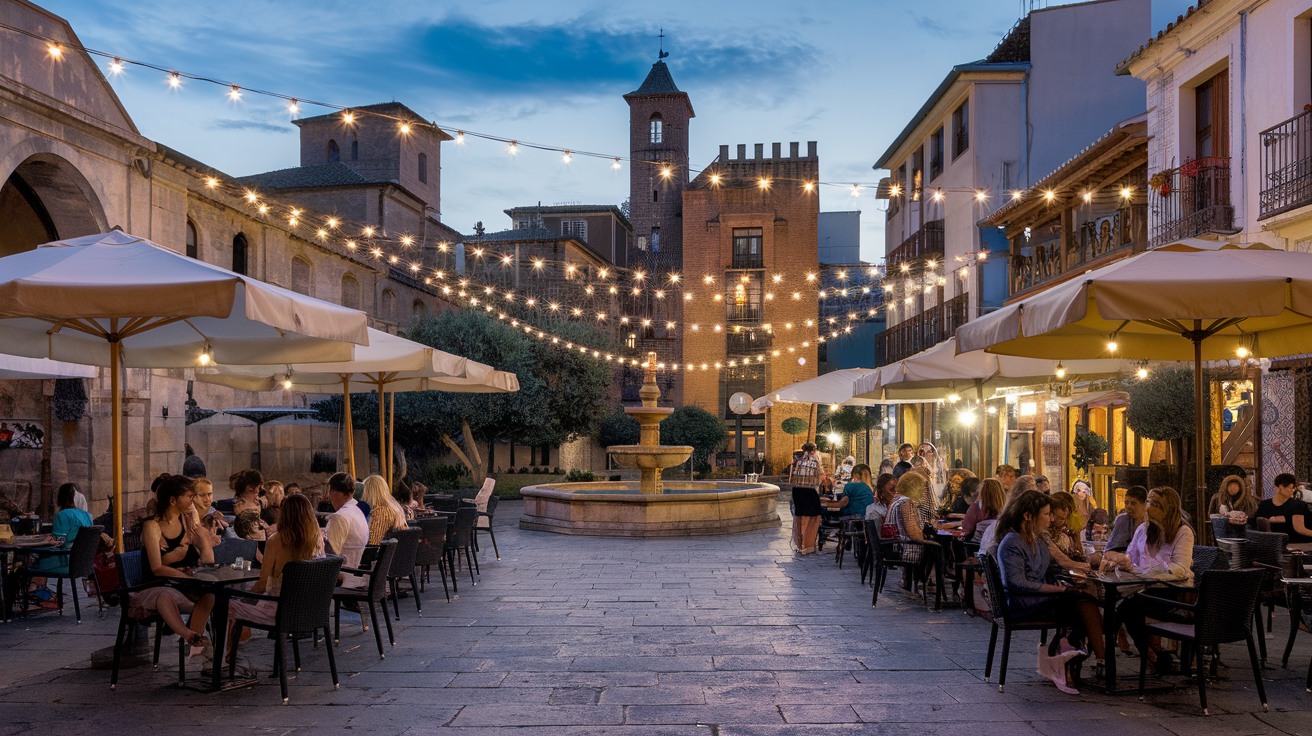
The terraza (outdoor terrace) is central to Spanish social life. Cafés and bars extend onto sidewalks and plazas; eating and drinking outdoors is the default when weather permits. This extends restaurant capacity and creates the lively street scenes that characterize Spanish cities.
Fishing
Both freshwater and saltwater fishing have strong followings. Coastal areas offer shore fishing and boat charters for deep-sea species. Interior rivers and reservoirs support trout, carp, and other freshwater fishing. Licensing requirements vary by region; check local regulations before fishing.
Hunting
Spain has an active hunting culture, particularly in rural areas. Wild boar, deer, small game, and birds are hunted in season. Strict regulations, licensing requirements, and designated hunting areas apply. This tradition is controversial but remains economically and culturally significant in many regions.
Getting outdoors safely
Weather awareness
Spanish weather can shift rapidly, particularly in mountains. Clear mornings may become stormy afternoons; hot valley temperatures don’t indicate mountain conditions. Check forecasts specifically for your activity area (AEMET, Spain’s meteorological agency, provides detailed mountain weather).
Summer heat in central and southern Spain presents genuine danger. Hiking in temperatures exceeding 35°C causes heat exhaustion and worse. Start early, finish by midday, or choose cooler northern regions.
Sun protection
Spanish sun is intense, particularly at altitude and near water. Sunburn happens quickly; skin cancer rates have risen as outdoor recreation increases. Sunscreen, hats, and covering clothing are essential, not optional.
Emergency services
The European emergency number 112 works throughout Spain. Mountain rescue, maritime rescue, and civil protection respond to outdoor emergencies. GPS coordinates speed rescue location—apps can share your position automatically.
Insurance covering rescue and evacuation is wise for serious mountain activities. The Spanish federation covers members for their specific sports; travel insurance may include adventure activity coverage.
Key takeaways
Spain’s outdoor opportunities rival any European country—mountains, beaches, trails, and sporting infrastructure support almost any activity you enjoy. The climate allows year-round activity somewhere in the country, and outdoor culture is deeply integrated into Spanish life.
Research conditions for your specific interests: hiking regions vary by season, beach destinations have different characters, sports have regional strongholds. The variety means you can find your outdoor niche wherever you settle, or explore different regions as seasons and interests change.
Safety requires respecting conditions—summer heat, mountain weather, and water hazards all demand appropriate preparation. But with reasonable precautions, Spain’s outdoors are welcoming and accessible, providing daily enrichment that becomes one of the great pleasures of life here.

Written by
John Spencer
John Spencer is a writer, researcher, and digital entrepreneur who specializes in expat life, relocation strategy, and lifestyle design—particularly in Spain. His work focuses on turning overwhelming topics like visas, residency, healthcare, banking, and cost of living into straightforward, decision-ready insights.
Disclaimer: The information on this page is for general informational purposes only and does not constitute legal, tax, financial, or medical advice. Requirements and regulations change frequently. Always verify information with official Spanish government sources and consult qualified professionals for your specific situation.
Planning your move?
Get our free checklist with everything you need to do before and after arriving in Spain.
Get the checklist