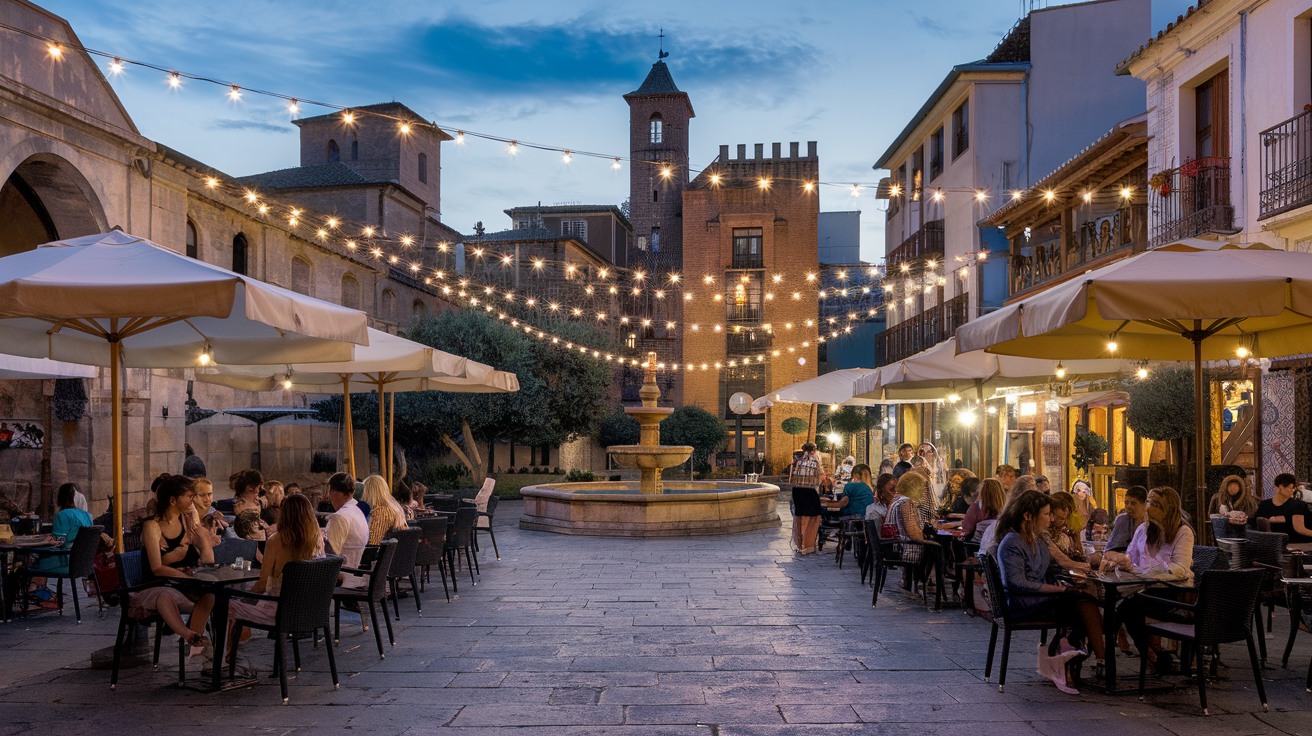
Food is central to Spanish life. Meals are social events, eating times follow their own rhythm, and regional cuisines vary dramatically. Understanding Spanish food culture helps you integrate, enjoy, and participate fully in one of life’s great pleasures here.
The Spanish eating schedule
The Spanish eating schedule surprises most newcomers. Adjusting to it takes time but eventually feels natural.
Breakfast (Desayuno) — 7-10am
Spanish breakfast is light:
- Coffee (café con leche most popular)
- Toast with olive oil and tomato (tostada con tomate)
- Pastry (croissant, magdalena)
- Orange juice (zumo de naranja)
At home: Often just coffee and something quick
At a bar: More leisurely, toast or pastry at the counter
Note: The big American or English breakfast doesn’t exist traditionally. You’ll find it in tourist areas, but locals eat light.
Mid-morning snack (Almuerzo) — 10-11:30am
Many Spaniards have a second, more substantial breakfast:
- Bocadillo (sandwich on crusty bread)
- Pincho de tortilla (slice of Spanish omelette)
- More coffee
This sustains them until the late lunch.
Lunch (Comida) — 2-4pm
This is the main meal of the day—not dinner.
Characteristics:
- Largest meal, often multiple courses
- Traditionally eaten at home with family
- 1-2 hour lunch breaks common (less so in modern offices)
- Restaurants packed from 2pm onward
Typical structure:
- Primer plato (first course): Soup, salad, vegetables
- Segundo plato (second course): Meat or fish with sides
- Postre (dessert): Fruit, flan, ice cream
- Coffee
Menú del día: Most restaurants offer a fixed-price lunch menu (€10-18) with first course, second course, dessert, bread, and drink. Excellent value and the best way to eat out at lunch.
Afternoon snack (Merienda) — 5-7pm
A small snack to bridge the gap to late dinner:
- Coffee and pastry
- Piece of fruit
- Sandwich
- For kids: chocolate with churros
Dinner (Cena) — 9-11pm
Dinner is lighter than lunch and comes late.
Characteristics:
- Lighter than midday meal
- Social occasion, often with friends
- Restaurants don’t fill until 9:30-10pm
- Weekends even later
Typical options:
- Tapas and drinks
- Lighter version of lunch
- Salad and omelette
- Sandwiches
Note: If you arrive at a restaurant at 7pm, it will likely be empty or closed. 9pm is the normal time.
Tapas culture
Tapas are small dishes meant for sharing, and understanding tapas culture enriches your social life in Spain.
How tapas works
The concept:
- Small plates, 1-3 bites to full portions
- Meant for sharing with the table
- Order multiple dishes for variety
- Accompany drinks (wine, beer, vermouth)
Ordering:
- Order for the table, not individually
- Start with 2-3 dishes, order more as you go
- Point and ask if you don’t know names
- Staff will guide you on quantities
Eating:
- Sharing is normal—reach across the table
- Use toothpicks or small forks provided
- No individual plates sometimes (everyone picks from same dish)
- Napkins often paper, tossed on floor in traditional bars
Tapas vs. raciones vs. pinchos
Tapas: Small portions, often free with drinks in some regions
Raciones: Larger portions to share (half-ración also available)
Pinchos/Pintxos: Individual bites on bread, each with a toothpick (Basque Country specialty)
Media ración: Half portion—useful for trying more dishes
Free tapas regions
In some areas, you get free tapas with each drink:
Granada: Famous for generous free tapas León: Strong free tapas tradition Almería: Free tapas with drinks Parts of Madrid: Some traditional bars continue the practice Salamanca: Student-friendly free tapas scene
In Barcelona, Valencia, and most of Catalonia, free tapas are not traditional.
Classic tapas dishes
| Dish | Description |
|---|---|
| Tortilla española | Potato omelette (also called tortilla de patatas) |
| Jamón ibérico | Cured ham, sliced thin |
| Croquetas | Creamy fried croquettes (ham, chicken, cod) |
| Patatas bravas | Fried potatoes with spicy sauce |
| Gambas al ajillo | Garlic shrimp in olive oil |
| Pulpo a la gallega | Galician-style octopus |
| Boquerones en vinagre | Anchovies in vinegar |
| Pimientos de padrón | Small fried peppers (some are spicy) |
| Calamares | Fried squid rings |
| Albondigas | Meatballs in tomato sauce |
| Pan con tomate | Bread with tomato and olive oil |
| Aceitunas | Olives |
| Queso manchego | Manchego cheese |
Tapas etiquette
- Standing at the bar is normal — Often cheaper than table service
- Order at the bar — Get attention, order, pay later
- Rounds of drinks — Each person often buys a round
- Move between bars — Traditional “tapas crawl” visits multiple spots
- Napkins on floor — In traditional bars, this indicates popularity
- Cash preferred — Some tapas bars don’t take cards for small amounts
Regional cuisines
Spain’s regions have distinct culinary traditions.
Andalusia
Characteristics: Olive oil dominant, fried foods, gazpacho, seafood
Signature dishes:
- Gazpacho (cold tomato soup)
- Salmorejo (thicker, creamier gazpacho)
- Pescaíto frito (fried fish assortment)
- Flamenquín (ham and pork rolled, breaded, fried)
- Rabo de toro (bull tail stew)
Basque Country
Characteristics: Considered Spain’s culinary capital, sophisticated techniques, pintxos culture
Signature dishes:
- Pintxos (elaborate bites on bread)
- Bacalao al pil-pil (cod in garlic-olive oil emulsion)
- Marmitako (tuna and potato stew)
- Txuletón (massive aged beef steak)
- Kokotxas (fish cheeks)
Catalonia
Characteristics: Mediterranean, influences from France, rice dishes, varied sauces
Signature dishes:
- Pa amb tomàquet (bread with tomato)
- Escalivada (roasted vegetables)
- Fideuà (noodle paella)
- Suquet de peix (fish stew)
- Crema catalana (similar to crème brûlée)
Galicia
Characteristics: Seafood dominant, Celtic influences, hearty and simple
Signature dishes:
- Pulpo a la gallega (octopus with paprika)
- Empanada gallega (savory pie)
- Caldo gallego (white bean soup)
- Percebes (gooseneck barnacles)
- Tarta de Santiago (almond cake)
Valencia
Characteristics: Rice dishes, fresh vegetables from la huerta, Mediterranean
Signature dishes:
- Paella valenciana (original paella with rabbit, chicken, beans)
- Arroz a banda (rice cooked in fish stock)
- Fideuà (noodle paella)
- All i pebre (eel stew)
- Horchata (tiger nut drink)
Castilla
Characteristics: Hearty, meat-focused, roasted meats, beans
Signature dishes:
- Cochinillo asado (roast suckling pig)
- Cocido madrileño (chickpea stew)
- Lechazo (roast lamb)
- Judiones de la Granja (giant white beans)
- Sopa castellana (garlic soup)
Asturias
Characteristics: Hearty, dairy-heavy, cider culture, beans
Signature dishes:
- Fabada asturiana (bean stew with sausages)
- Cachopo (breaded, stuffed veal)
- Queso cabrales (strong blue cheese)
- Pote asturiano (meat and vegetable stew)
Drinks culture
Wine
Spain is the world’s third-largest wine producer.
Key regions:
- Rioja: Spain’s most famous, red wines, oak-aged
- Ribera del Duero: Powerful reds, Tempranillo
- Priorat: Intense, premium reds
- Rías Baixas: Albariño white wines
- Jerez: Sherry wines
Ordering wine:
- Vino tinto (red), blanco (white), rosado (rosé)
- Copa de vino (glass of wine)
- Ask for “vino de la casa” for house wine (good value)
- Wine is affordable—€2-4 for a glass in most places
Beer
Popular brands:
- Mahou (Madrid)
- Estrella Galicia (Galicia)
- Estrella Damm (Catalonia)
- Cruzcampo (Andalusia)
- San Miguel (national)
- Alhambra (Granada)
Ordering:
- Caña: Small draft beer (~200ml)
- Doble: Double-size caña
- Jarra: Large mug
- Botellín: Small bottle
- Tercio: 330ml bottle
- Quinto: 200ml bottle
Other drinks
Vermouth (Vermut):
- Experiencing a revival
- Traditionally Sunday pre-lunch drink
- Served on the rocks with olive/orange
- Especially popular in Barcelona, Madrid
Sidra (Cider):
- Traditional in Asturias and Basque Country
- Poured from height to aerate
- Drink quickly before it goes flat
Sangría:
- Tourist drink mostly
- Locals rarely order it
- If you want it, go ahead—just know it’s not typical
Tinto de verano:
- Red wine with lemon soda
- Refreshing summer drink
- What locals drink instead of sangría
Café con hielo:
- Coffee served with glass of ice
- Pour hot coffee over ice yourself
- Essential summer refreshment
Shopping for food
Supermarkets
Major chains:
- Mercadona: Largest chain, good value, own brands
- Carrefour: French chain, wide selection
- Lidl/Aldi: Discount, good for basics
- El Corte Inglés Supermercado: Higher-end, good quality
- Dia: Budget-friendly, neighborhood locations
- Consum: Strong in Valencia region
- Eroski: Basque Country origin, nationwide
Tips:
- Mercadona’s fresh products (Hacendado brand) are good quality
- Bring your own bags or pay for them
- Produce is often self-weighed—print the label
Markets (Mercados)
Traditional covered markets exist in every city:
Why shop there:
- Fresher produce
- Higher quality meat and fish
- Local specialties
- Support small vendors
- Cultural experience
Famous markets:
- Mercado de San Miguel (Madrid)
- La Boqueria (Barcelona)
- Mercado Central (Valencia)
- Mercado de la Ribera (Bilbao)
- Mercado de Triana (Seville)
Tips:
- Go early for best selection
- Build relationships with vendors
- Ask for recommendations
- Prices may be higher than supermarkets but quality reflects it
Specialty shops
Traditional specialty shops still thrive:
- Carnicería: Butcher
- Pescadería: Fish shop
- Frutería: Fruit and vegetable shop
- Panadería: Bread shop
- Pastelería: Pastry shop
- Charcutería: Cured meats and cheeses
Quality is often superior to supermarkets, and shopkeepers provide expertise.
Eating out tips
Restaurant types
Bar: Drinks and tapas, casual standing or sitting Cafetería: Coffee, light meals, often breakfast/lunch focused Restaurante: Full-service restaurant, sit-down meals Tasca/Taberna: Traditional tavern, tapas and simple dishes Asador: Grill restaurant, roasted meats specialty Marisquería: Seafood restaurant Chiringuito: Beach bar/restaurant Sidrería: Cider house (Asturias/Basque)
Ordering and paying
Getting service:
- Catch the waiter’s eye or say “perdona” or “oiga”
- Service is not rushed—you won’t be hurried
- Flag them down for the bill (“la cuenta, por favor”)
The bill:
- Ask for it—it won’t come automatically
- Service is included (no obligation to tip)
- Small tip appreciated (round up or 5-10% for good service)
- Many places still prefer cash
Bread charge:
- Some restaurants automatically bring bread
- It’s charged (€1-2)
- Say “sin pan” if you don’t want it
Reservations
When to book:
- Weekend dinners at popular restaurants
- Large groups
- Special occasions
- Basque pintxo bars (often no reservations)
Peak times:
- Lunch: 2-3pm
- Dinner: 9-10pm
- Earlier times = empty restaurant (and possible tourist trap)
Social eating norms
Sharing is caring
Spanish meals are communal:
- Order dishes for the table to share
- Reaching across is normal
- Everyone contributes to ordering decisions
- Individual entrées are less common in casual settings
Taking your time
Meals are not rushed:
- Enjoy conversation between courses
- Sobremesa: Post-meal conversation at the table
- Lingering is expected, not rude
- You’ll never be rushed out
Paying
Group meals:
- Splitting evenly is common
- One person often pays, others reciprocate next time
- Offering to pay is polite
- Fighting over the bill is expected theater
Dietary restrictions
Spain is adapting but still traditional:
Vegetarian: Getting easier, especially in cities. Ask for dishes without meat (sin carne). Many tapas are naturally vegetarian.
Vegan: More challenging. Dedicated vegan restaurants exist in major cities. Traditional restaurants may struggle.
Gluten-free: Increasing awareness. Celiacs organizations (FACE) provide restaurant lists. Ask “¿Tenéis opciones sin gluten?”
Allergies: Take seriously, but communicate clearly. “Soy alérgico/a a…” (I’m allergic to…)
Seasonal eating
Spanish cuisine follows seasons:
Spring:
- Fresh vegetables (artichokes, asparagus)
- Lamb
- First gazpachos appear
Summer:
- Gazpacho, salmorejo
- Light salads
- Grilled fish
- Tinto de verano
- Less heavy meals
Autumn:
- Mushrooms (setas)
- Game meats
- Chestnuts
- Heartier stews return
Winter:
- Cocido and bean stews
- Roasted meats
- Christmas sweets (turrón, polvorones)
- Heavy, warming dishes
Key takeaways
- Embrace the schedule — Eat when Spaniards eat to find the best food and atmosphere
- Lunch is the main event — Take advantage of menú del día for value
- Tapas is social — Share, stand at bars, move between venues
- Regional diversity — Each region has distinct traditions worth exploring
- Quality matters — Spaniards prioritize ingredient quality over elaborate preparation
- Take your time — Meals are experiences, not just fuel
- Be adventurous — Try local specialties even if unfamiliar
Spanish food culture is one of the great pleasures of living here. Embrace it, explore it, and enjoy the fact that eating well is considered a birthright, not a luxury.

Written by
John Spencer
John Spencer is a writer, researcher, and digital entrepreneur who specializes in expat life, relocation strategy, and lifestyle design—particularly in Spain. His work focuses on turning overwhelming topics like visas, residency, healthcare, banking, and cost of living into straightforward, decision-ready insights.
Disclaimer: The information on this page is for general informational purposes only and does not constitute legal, tax, financial, or medical advice. Requirements and regulations change frequently. Always verify information with official Spanish government sources and consult qualified professionals for your specific situation.
Planning your move?
Get our free checklist with everything you need to do before and after arriving in Spain.
Get the checklist